Saroj UpretiSelf-driving labs for materials discovery
Control room

Saroj Upreti

Ph.D. candidate · Gu Research GroupTake the tour

/ solving polymer problems with AI & robotics

ALS Doctoral Fellow · Berkeley Lab

Berkeley, California

I solve polymer science problems with AI and specialized processing robots, built into self-driving labs.

/ how a self-driving lab works

Closing the loop

Each stage hands off to the next, and the model chooses what to try. Watch it run, or click through yourself.

01 Make — Formulate and coat

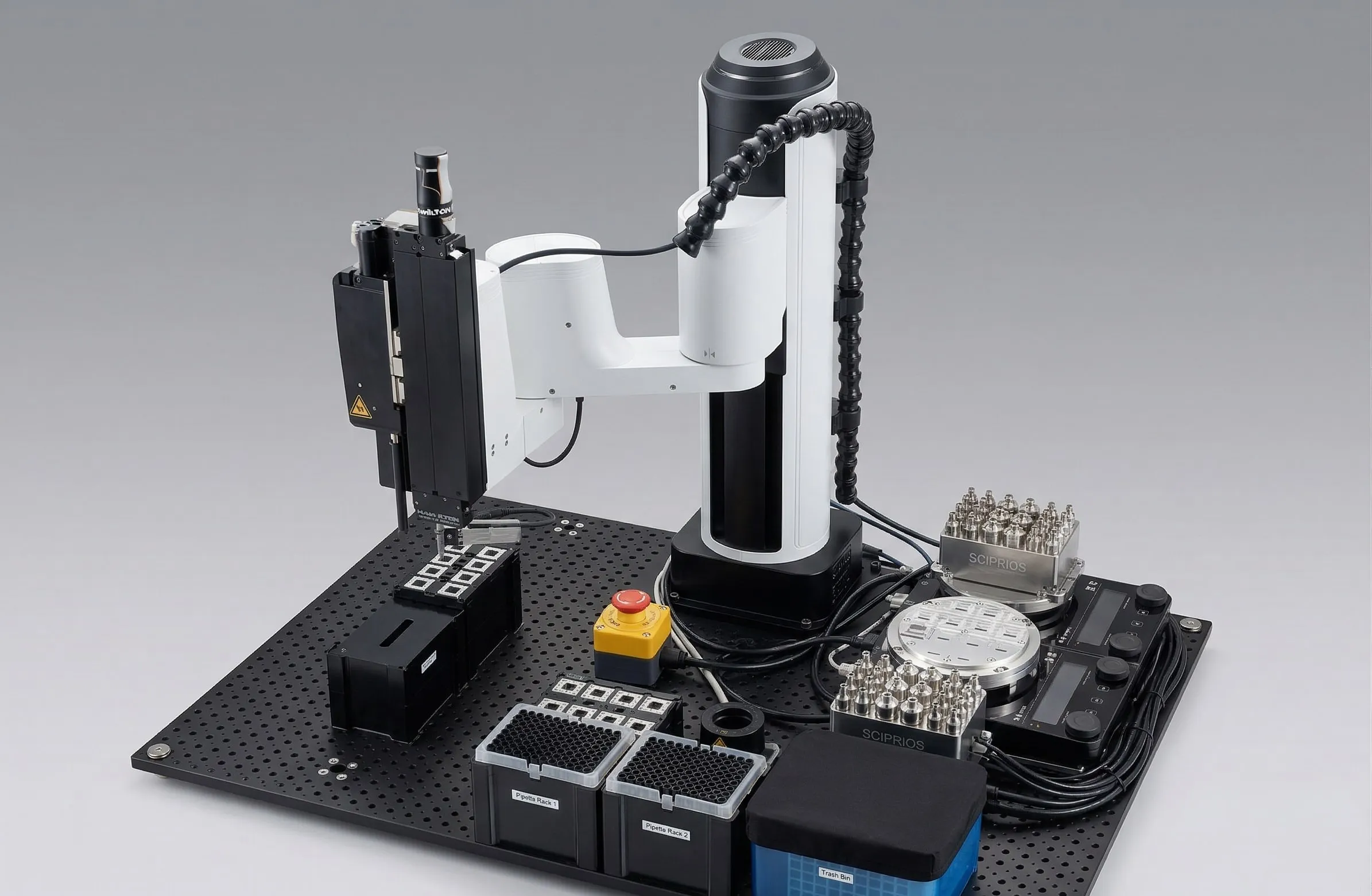
The robot mixes formulations, coats them onto wafers and racks them for measurement, sample after sample.

The formulation and coating robot, sped up 20×. The robotic platform →

02 Measure — Read the nanostructure

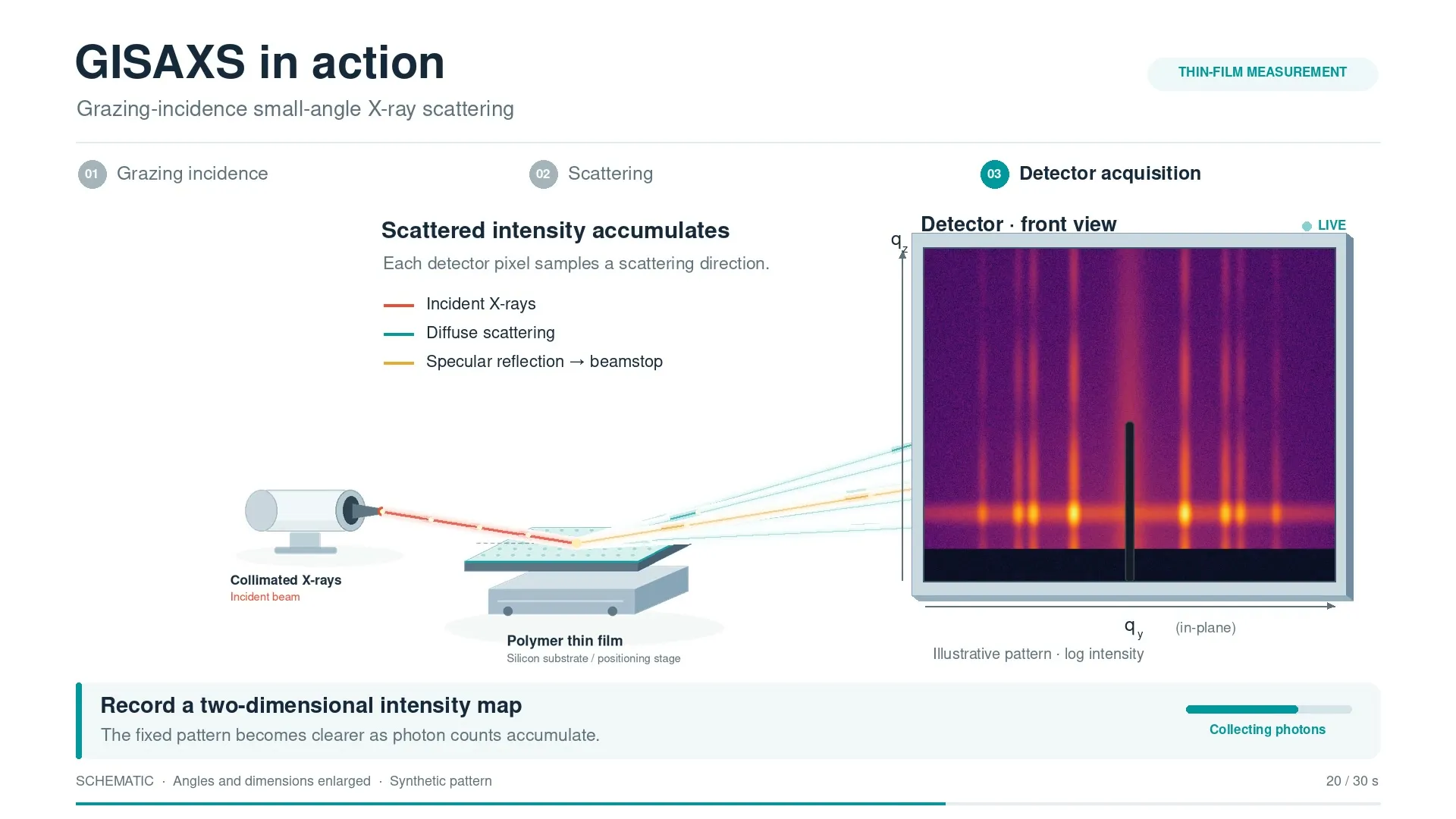
Grazing-incidence X-ray scattering turns each film’s nanoscale order into a 2D pattern.

How GISAXS works: a shallow beam probes the film; the detector records how its nanostructure scatters. Beamline campaigns →

03 Rapid analysis — Reduce and fit as data arrive

NOVA reduces each new detector image, fits its scattering peaks and records the results as measurements come in.

NOVA working through masking, reduction, peak fitting and automated monitoring, sped up 16×. About NOVA →

04 Learn — Update the model

Each round of results reshapes the model’s picture of the design space and sharpens where to look next.

The model’s predicted q₂/q₁ surface over eleven iterations; stars mark each round’s proposed compositions. Learning from the data →

05 Design / Command — Choose and send the next batch

Illustration: a surrogate model proposing the next batch of experimentsA triangle spans every blend of three components. Colour shows the model’s predicted property, fading where it is uncertain; white circles are measured samples, and four stars mark the compositions it proposes to make next, listed on the right and queued for the robot.Component AComponent BComponent C1234Surrogate modelWhere to experiment nextlowerpredicted propertyhighermeasuredproposeduncertainNext batch1A 53% · B 30% · C 17%2A 70% · B 7% · C 23%3A 7% · B 7% · C 87%4A 33% · B 57% · C 10%→ queued for the robotIllustration

The updated model proposes the next batch — where the prediction looks promising, or where it is least certain — and sends it to the robot to start the next round.

An illustration of how a Gaussian-process model picks the next batch. Bayesian optimization in practice →

Robotic processing, robotic GISAXS and rapid analysis working together.
30 ± 1 nm
target domain spacing reached by closed-loop optimization
65+
shifts of synchrotron beamtime at ALS and NSLS-II
20
papers and preprints, 2 as first or co-first author
72
citationsh-index 5 · i10-index 3

Citation figures from Google Scholar, September 2026.

/ selected work

What I build

All research →
  1. in progress · ALS beamline 7.3.3

    01. Autonomous inverse design

    A team-built closed loop in which a Gaussian-process optimizer drives a synchrotron beamline directly, finding the processing route to a named target morphology in 20–30 experiments instead of thousands.

    20–30experiments to hit the target, versus a grid scan of thousands
    • Bayesian optimization
    • gpCAM
    • GISAXS
    • Inverse design
    Grazing-incidence X-ray scattering: a shallow beam probes the polymer film and the scattered pattern builds up on a 2D detector.
  2. first author · ACS Nano 2026

    02. Robotic grid-search platform

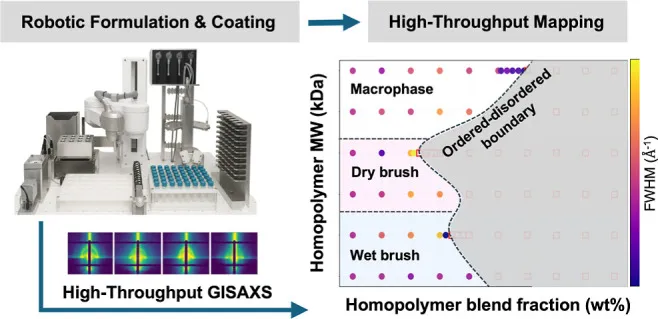
    Hundreds of thin-film samples fabricated in hours, measured by synchrotron scattering, and turned into the first high-throughput map of the order–disorder transition landscape in triblock copolymer–homopolymer blends.

    100sof thin-film samples fabricated and characterized per day

    • High-throughput experimentation
    • Robotics
    • SAXS / GISAXS
    • Phase behavior
    Robotic formulation and coating feed high-throughput GISAXS, producing a map of the order–disorder boundary across homopolymer molecular weight and blend fraction.
  3. co-first author · Macromolecules 2026

    03. ML processing–structure

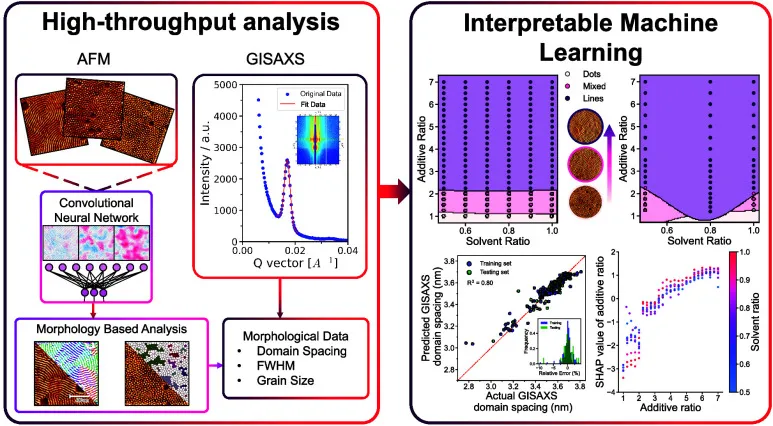
    A machine learning framework that predicts block copolymer thin-film morphology from processing conditions, trained on high-throughput scattering data across six chemistries.

    6block copolymer chemistries in one generalizable model

    • Machine learning
    • Structure–property relationships
    • Scattering analysis
    • Open database
    High-throughput AFM and GISAXS analysis feeding interpretable machine-learning models of processing–structure relationships.
  4. now building · Berkeley Lab

    04. Multimodal self-driving lab

    Current work at Berkeley Lab — a multimodal self-driving lab that uses active learning to map polymer blend morphology and phase behavior, choosing each next sample where the map is least certain.

    NowALS Doctoral Fellowship, Berkeley Lab, 2026–27

    • Self-driving labs
    • Active learning
    • Phase mapping
    • Multimodal characterization
    AI-generated illustration of a benchtop robotic self-driving lab platform. Not a photograph of the installed hardware.Illustration

/ in print

Selected papers

All 20 publications →

Want to talk about self-driving labs?Email me, or read more about me.